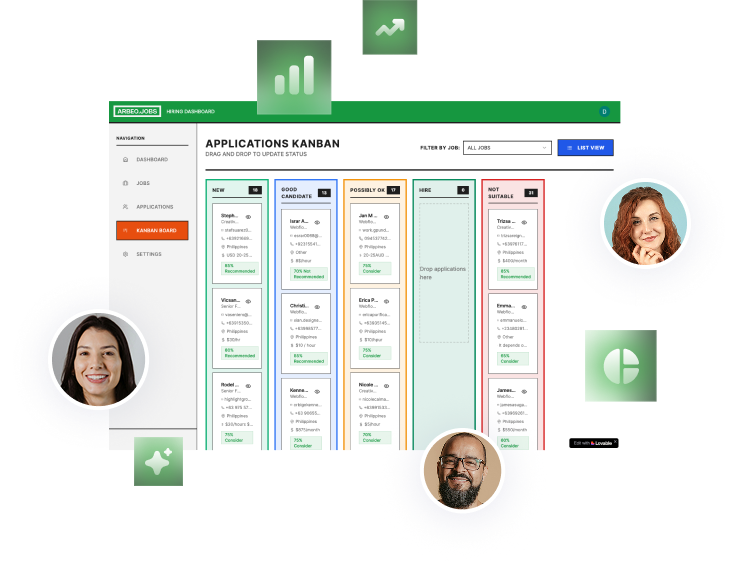
So we've done some recent product updates to the product, and a couple of them were to improve the process for a job applicant to apply for a job. What we've built is something that I think fundamentally changes how candidates interact with job applications - but whether hiring managers actually want this is something we're about to find out.

The AI Agent That Actually Talks to Your Candidates
Here's how it works now. When you come in as the hiring manager, you can create a job using AI or using the form. But here's where it gets interesting - you can select whether you want the candidate to apply either through an AI agent chat or whether you just want the normal default application form.
If you choose the agent chat, the agent will effectively ask the candidate all the questions that it needs for the base requirement of the application - you know, CV and job experience and salary and all those things. But it also then dives deeper into the candidate as well.
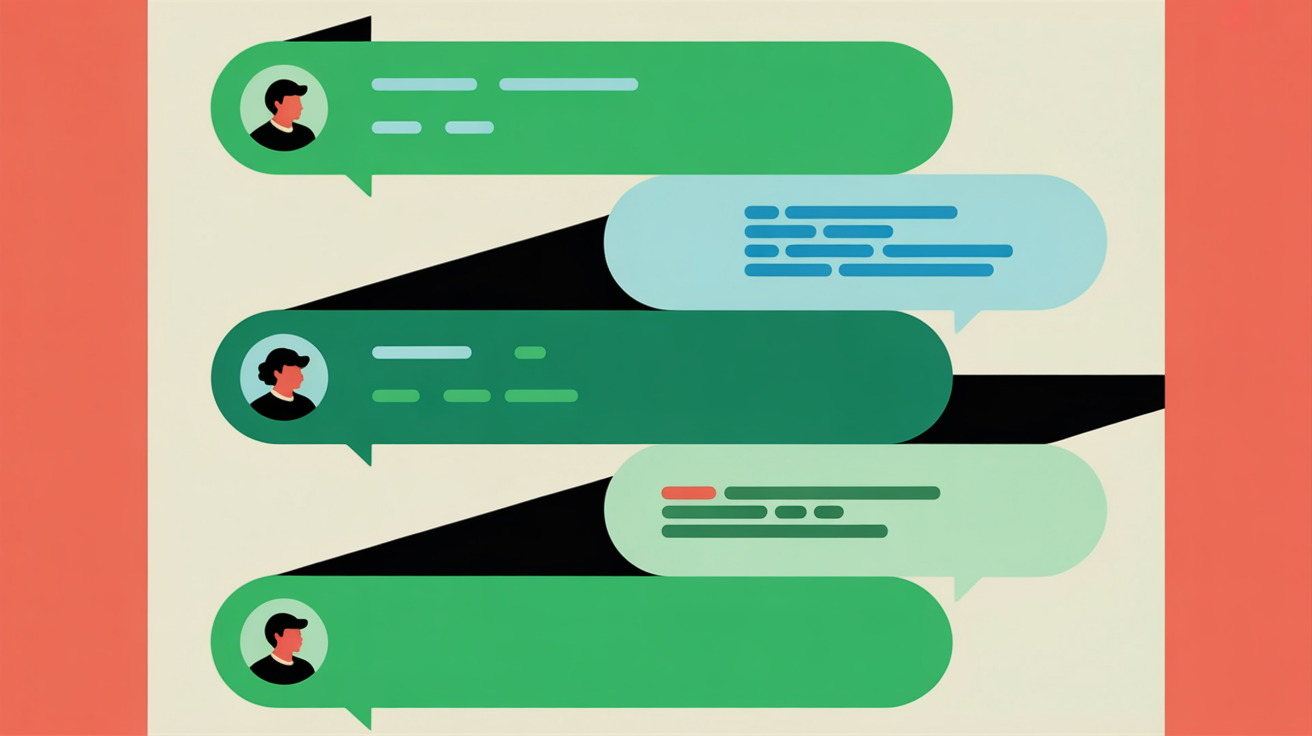
"It asks questions about their last role, what were their roadblocks, what were their communications problems? Were they mentoring? Were they not mentoring? Talking about great successes in their last role and really turning into a way in which we can extract more information from a candidate."
The whole point is that when their application comes in, it's got more information than just a few fields that are in a normal application form. We're not just collecting data - we're having a conversation.
The UX Designer Who Failed Because of Spelling Mistakes
During our test, one of the test jobs was for a UX designer. And during our test, I was talking to the agent, but I wasn't putting in spelling - I was making lots of spelling mistakes just because I was typing really fast.
Here's what happened next that surprised even me. That was picked up as attention to detail. The AI reasoned that a UX designer should have high attention to detail. And to have spelling mistakes just with typing probably isn't something you want a UX designer to do.
"So it picks that up and, you know, it shows that as a part of the score and shows the reasoning. Which was an interesting discovery when we were doing the matching."
All of that data runs through the AI matching service that we've built and then shows our hiring manager a job matching score based off a whole lot of different areas. It's not just about keywords anymore - it's about behavior, communication style, and attention to detail in real-time.
What We Don't Know Yet (And Why That Matters)
Well, we've only just released it, so it's ready for people to use. We haven't had any hiring managers feedback on this one yet. But I'm sure that we will soon.
What we're trying to learn is whether or not the agent is asking the right questions, whether the agent can ask more questions. We want to make sure that the agent is personable, but also that the agent isn't being overly intrusive or asking five of the repeat questions.
"We wanna make sure that the agent is smart enough to pick up the right information and then move on to the next topic to find out what other knowledge it can find out from our user."
We'll be reaching out to our users. If they've been using it, we'll reach out and ask them the question to find out how they're going. We will be doing that through surveys and one-to-one emails. It's a balance between being thorough and not annoying candidates to death.
The Big Question: Should We Build Voice AI Interviews?
The other thing we're considering on building is should we build a voice real-time agent interview as a part of the application process. I think it's - you know, is it too impersonal to have to be interviewed by an AI agent and not by a human being, considering the people you're gonna work with are humans? Not AI agents, although depending.
Maybe there's a way in which we ask. Our hiring manager can say, as they're filtering through applications in the Kanban view, they can say, well, this one, I wanna send to our AI interviewer. As a quick ten-minute interview before we've sent it off to book in appointments with our tech leads or hiring managers or marketing managers, whoever's doing the hiring.
But here's the thing - we just wanna know that it's gonna create value, and we wanna know that it's something people want.
"I just don't know if it's a techie cool thing that, you know, technically, we could do it. It doesn't mean you actually should do it. But, yeah, at the moment, it's up for our users to decide whether or not they'd like it or not."
What This Means for Hiring Managers Who Aren't Professional Recruiters
Look, we built this specifically for managers who hire occasionally - not professional recruiters. The whole idea is that you don't need to be an expert interviewer to get good information from candidates. The AI agent handles the conversation flow, asks follow-up questions based on responses, and surfaces insights you might miss in a traditional application.
Think about it - when you're drowning in resumes and you're trying to hire while doing your actual job, you need something that gives you deeper insights without taking more of your time. That's what this AI chat application process is designed to do.

The matching score isn't just about keywords on a resume. It's about how candidates communicate, their problem-solving approaches, their actual experiences with roadblocks and successes. It's the kind of stuff you'd only find out in a lengthy phone screen - except it happens automatically during the application process.
The Reality Check
We also fixed a whole lot of other small bug fixes that we fixed as well and little issues. But the AI chat application is the big one. It's the one that could change how hiring works for non-professional recruiters.
The question isn't whether we can build cool tech. The question is whether this actually helps managers make better hiring decisions in less time. That's what we're about to find out.
If you're using Arbeo and you've tried the AI chat application feature, reach out. Tell us what worked, what didn't, and whether you think voice interviews would help or just make things weird. Because at the end of the day, this is about making hiring easier for you - not about building tech for tech's sake.
Frequently Asked Questions
How does the AI chat application feature work?
When creating a job posting, hiring managers can choose between a traditional application form or an AI agent chat. The AI agent asks candidates standard questions about CV, experience, and salary, then dives deeper into their last role, roadblocks, communication style, and successes. All responses are analyzed and scored to give hiring managers more comprehensive insights than a typical application form.
Can the AI agent detect things beyond what candidates explicitly say?
Yes. During testing with a UX designer position, the AI detected spelling mistakes in a candidate's responses and flagged this as a potential attention to detail issue - something particularly important for UX roles. The system shows both the matching score and the reasoning behind it.
What kind of feedback is Arbeo looking for on this feature?
We want to know if the agent asks the right questions, maintains the right balance between being thorough and personable without being intrusive or repetitive, and whether it creates real value for hiring managers. We're reaching out through surveys and one-to-one emails to gather this feedback.
Is Arbeo planning to add voice or video AI interviews?
We're considering it, but we're not sure yet. The idea would be to let hiring managers send certain candidates to a quick 10-minute AI interview before scheduling time with human interviewers. However, we want user feedback first to ensure this would create value rather than just being 'techie cool.'
Who is this AI chat application feature designed for?
It's specifically built for managers who hire occasionally - not professional recruiters. The goal is to help non-expert interviewers get deeper candidate insights without taking more of their time, extracting the kind of information you'd normally only get in a lengthy phone screen.
Heading 1
Heading 2
Heading 3
Heading 4
Heading 5
Heading 6
Lorem ipsum dolor sit amet, consectetur adipiscing elit, sed do eiusmod tempor incididunt ut labore et dolore magna aliqua. Ut enim ad minim veniam, quis nostrud exercitation ullamco laboris nisi ut aliquip ex ea commodo consequat. Duis aute irure dolor in reprehenderit in voluptate velit esse cillum dolore eu fugiat nulla pariatur.
Block quote
Ordered list
- Item 1
- Item 2
- Item 3
Unordered list
- Item A
- Item B
- Item C
Bold text
Emphasis
Superscript
Subscript